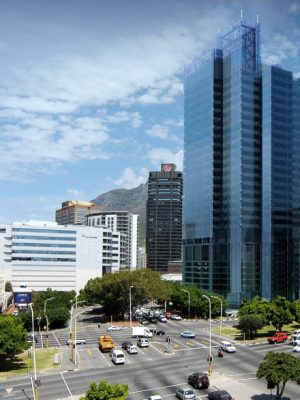
The Foreshore in Cape Town is undergoing a noticeable transformation. What was once seen as a transitional space between the CBD and harbour is now positioning itself as one of the city’s most strategic office destinations. With its growing cluster of A and AAA-grade office developments, strong infrastructure, and proximity to key transport routes, Foreshore is attracting a wide range of corporate tenants and investors who want access to the CBD without the congestion, aging buildings, and higher operating costs that often come with it.
Strategic Positioning and Accessibility
One of Foreshore’s main strengths is location. It sits between the Cape Town CBD, the harbour, the V&A Waterfront, and the main highways leading into the city. From a commercial standpoint, this gives tenants direct access to the N1, N2, and M3, as well as the MyCiTi bus service, train station, and other public transport hubs. For companies with staff commuting from all corners of the metro — or those that host regular client meetings — this accessibility makes day-to-day operations easier.
It also means your business can maintain a central Cape Town presence without the logistical challenges of operating in the tighter city grid.
New Office Stock and High-Quality Developments
Foreshore has become a hotspot for new office developments that meet modern corporate requirements. Projects like Portside Tower, The Halyard, Roggebaai Place, Harbour Arch, and The Towers have shifted the commercial skyline, offering tenants new buildings with high efficiency, green credentials, and premium-grade facilities. These developments are generally built with open-plan layouts, strong digital infrastructure, backup power, and onsite security — all major requirements for modern businesses in 2025.
Compared to many buildings in the traditional CBD, these offices offer better floor plates, lower maintenance costs, and newer systems. That appeals not only to large corporates but also to smaller professional firms looking to modernise their working environment.
Growth of Mixed-Use and Lifestyle Integration
What sets Foreshore apart is how quickly it’s moving toward a mixed-use urban model. Harbour Arch, for example, brings a large-scale live-work-play precinct into the node, with offices, apartments, hotels, and retail all integrated into a single space. This model has already proven successful in Century City and the Waterfront and is now gaining traction in the Foreshore.
This means tenants have access to gyms, restaurants, cafés, and short-term accommodation all within walking distance of the office. For staff, it improves the workday experience. For employers, it’s a value-add that supports productivity and retention.
Reliable Infrastructure and Energy Resilience
Cape Town continues to make significant investment into the Foreshore’s public infrastructure. Roads have been upgraded, traffic flow has improved, and fibre networks have been expanded throughout the area. More importantly, most new buildings in Foreshore come with backup generators, solar PV systems, and water-saving infrastructure — helping tenants avoid downtime and manage utility costs more effectively.
In a city where loadshedding remains a reality, energy resilience has become a core criterion in office leasing decisions. Foreshore’s ability to deliver reliable infrastructure is playing a major role in its rising popularity.
Lower Vacancy Rates and Stronger Tenant Confidence
While the broader Cape Town office market continues to stabilise post-pandemic, certain nodes are seeing clear growth in demand. Foreshore is one of them. Recent leasing activity suggests growing confidence in the area — particularly among legal firms, engineering consultancies, financial services businesses, and media agencies.
Vacancy rates in newer, premium-grade buildings in the Foreshore are lower than the CBD average, and this trend is likely to continue as more companies relocate from older buildings in the inner city and surrounds. Unlike some oversupplied office nodes in other metros, Cape Town has limited new commercial land, making these precincts more competitive.
Competitive Rentals Relative to the Waterfront and Claremont
Compared to premium office space in the V&A Waterfront or Southern Suburbs like Claremont, Foreshore offers more competitive rental rates for similar or newer quality stock. This price-to-quality ratio is appealing to tenants that need a corporate presence without overcommitting on costs.
Most of the buildings offer flexible floorplates, sectional title opportunities, and long-term lease security, making them suitable for a variety of business sizes and sectors. The ability to scale within a precinct, combined with the affordability factor, supports both startups and multinationals alike.
Ongoing Public and Private Investment
Both public and private stakeholders continue to invest in Foreshore. The City of Cape Town’s road and precinct upgrades, investments in the MyCiTi system, and support for urban improvement initiatives ensure a more stable, better-managed commercial node.
Meanwhile, developers are introducing green-certified buildings and rolling out precinct-level sustainability measures — a key consideration for ESG-focused businesses. The introduction of 24/7 security patrols, pedestrian-friendly zones, and urban landscaping is also improving the overall appeal of the area.
Future Outlook
As Cape Town’s commercial real estate landscape continues to adapt to new work models, Foreshore is expected to play a bigger role in the city’s office ecosystem. The ongoing shift toward decentralisation, lifestyle integration, and hybrid working favours areas that combine accessibility, infrastructure, and flexibility — all of which Foreshore now offers in increasing measure.
Businesses looking for long-term value, security of operations, and a modern workplace environment are likely to keep the momentum going in this node over the coming years.