Cape Town Office Space Trends in 2025 and 2026: What Businesses Need to Know
Cape Town’s office market has moved decisively in the past 18 months. Vacancy rates that hit 16.5% in late 2021 have compressed to 9.4% city-wide by early 2026, the tightest reading since before the pandemic. Prime grade space is under even more pressure, with vacancy at 6.8% nationally and Cape Town outperforming every other major metro. Rental growth in decentralised Grade A nodes has hit 11.7% in nominal terms. This is not a market recovering slowly. It is a market where the window to find quality space at reasonable terms is narrowing, and businesses that wait are finding fewer options and less landlord flexibility than they had two years ago.
Understanding the forces driving these shifts helps businesses make better leasing decisions.
The Supply Pipeline Is Effectively Empty
One of the most underappreciated dynamics in the current Cape Town office market is the near absence of new supply. Only one major office tower broke ground nationally in 2025. In Cape Town specifically, constrained development land, construction costs, and financing conditions have kept the pipeline dry across most nodes. When demand recovers in a market with no new supply coming, the math works against tenants. Landlords gain pricing power. Concession packages thin out. The best floors in the best buildings get absorbed quickly, and what remains tends to be older stock, smaller floor plates, or locations that compromise on access or amenity. For businesses planning a move or a renewal, this supply constraint is the single most important market condition to factor in. The negotiating environment of 2022 and 2023, when landlords were motivated to fill space and offered generous fit-out contributions and rent-free periods, has largely passed in the Cape Town prime market. Tenants who go to market without that understanding often get a rude shock when they engage landlords.
Hybrid Work Has Settled, and It Is Reshaping What Tenants Actually Need
The office is not dead. But it has changed what it needs to do. Global data from the HubStar Hybrid Occupancy Index, which tracked over 300 million square feet of office space across 13 countries through 2025, shows that hybrid work patterns have stabilised. Average occupancy concentrates midweek, with Tuesday recording the highest attendance globally at 58.6%. Monday and Friday remain the quietest days, with Friday averaging 34.5% occupancy.
This pattern has a direct implication for how businesses should think about their space requirements. An office sized for five-day-a-week full attendance is now consistently underused. An office sized for peak midweek attendance and calibrated for the type of work people actually come in to do, collaboration, client meetings, team sessions, focused work that benefits from a structured environment, is an asset. The FNB Commercial Property Finance Q3 2025 Property Broker Survey recorded the final quarter of 2025 as the first time since the survey began in 2019 that demand outstripped supply across office, industrial, and retail spaces simultaneously, with hybrid and return-to-office policies boosting demand for quality, well-located spaces.

Decentralised Nodes Are Outperforming the CBD
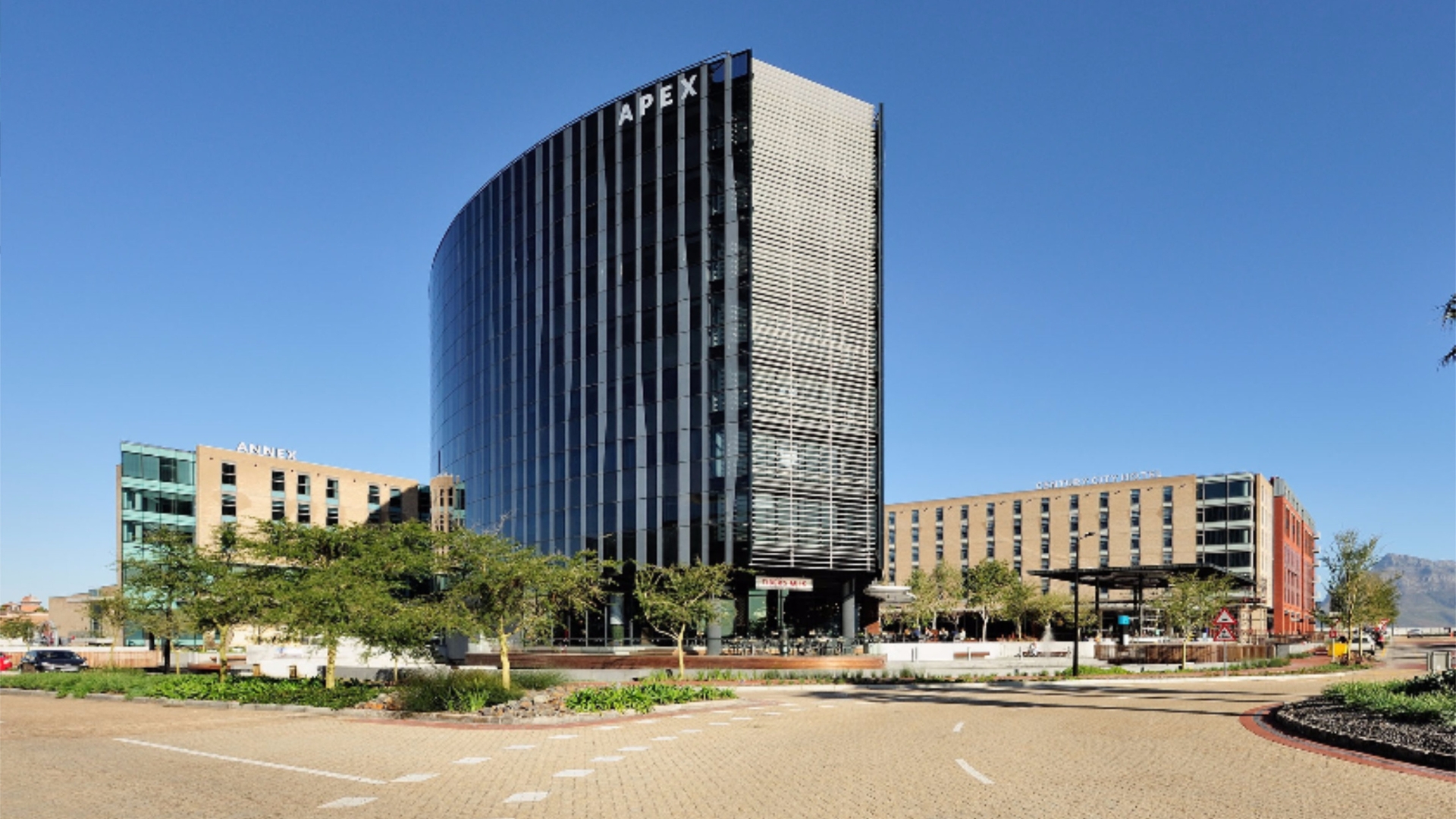
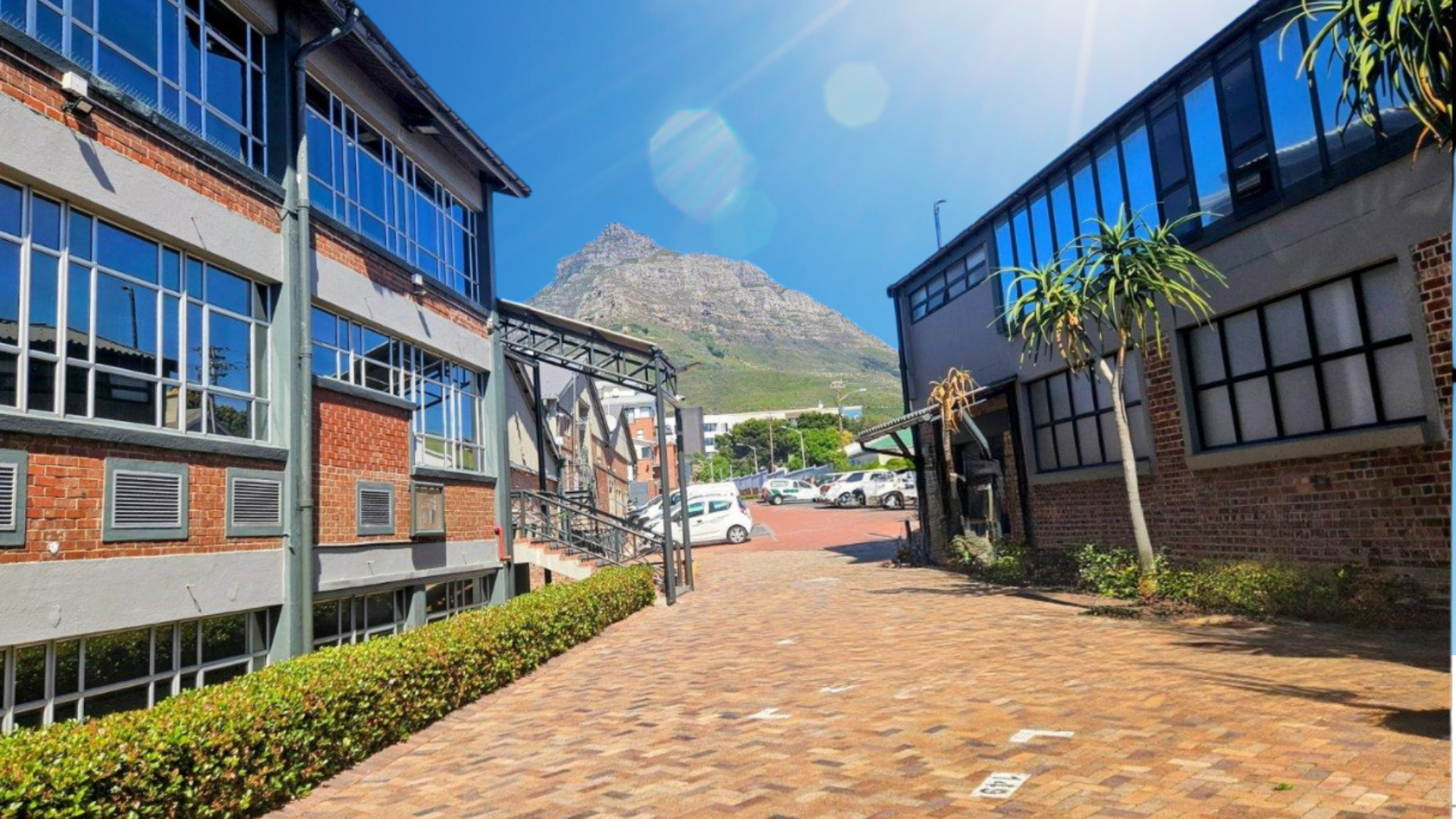
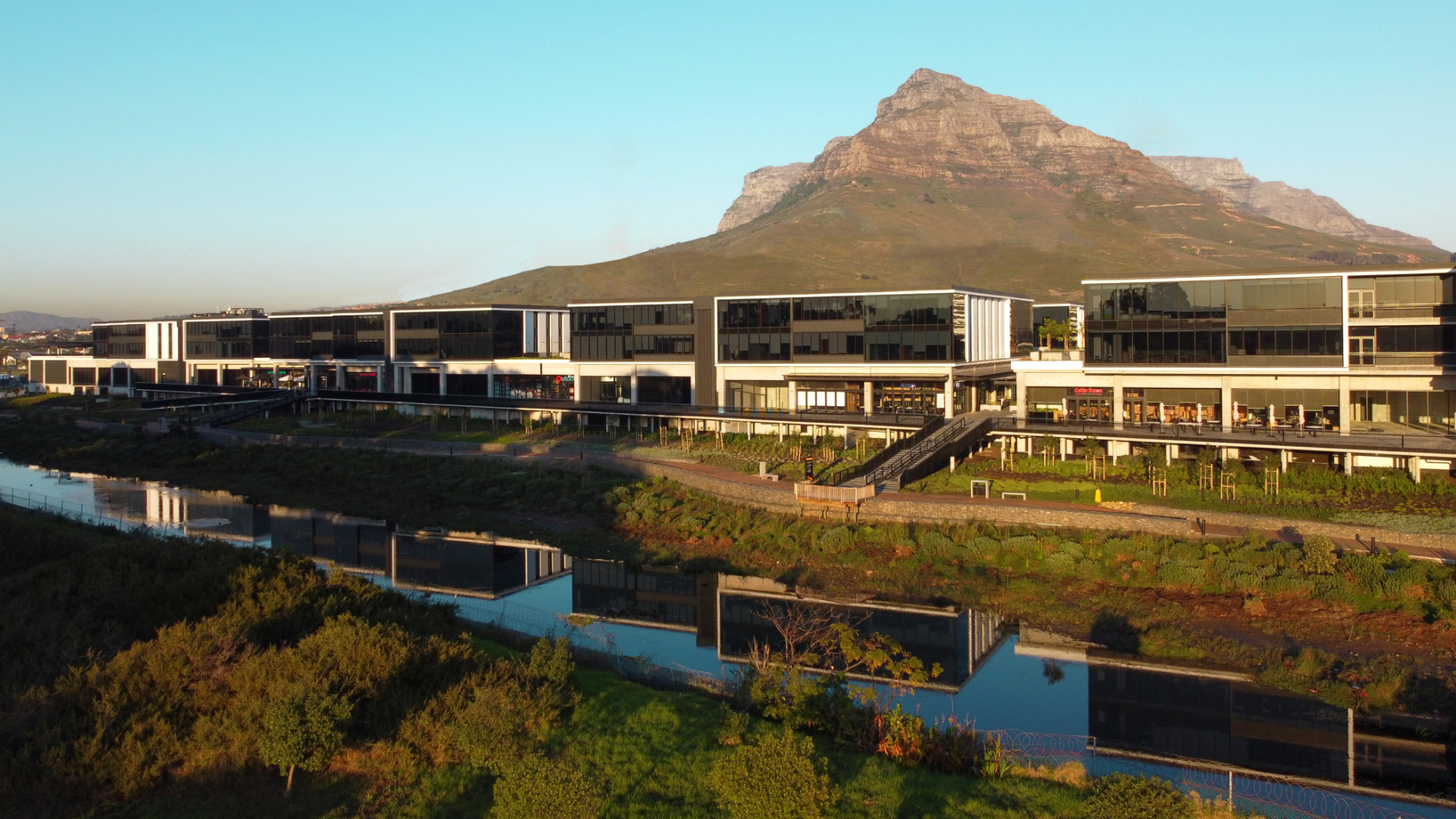
One of the clearest and most consistent trends in Cape Town’s office market is the relative strength of decentralised nodes over the central business district. Nationally, decentralised markets are recording vacancy rates of 11.5% compared with 16.1% in CBDs, with occupiers favouring accessible, amenity-rich locations that align with hybrid working patterns. Cape Town’s decentralised nodes, including Century City, Claremont, and Tygervalley, have been among the strongest performers in this shift.
The reasons are not complicated. Businesses with staff commuting from across the Cape Town metropolitan area increasingly value locations that are accessible from multiple directions without routing through the city bowl. Highway-adjacent nodes with structured parking, retail amenity, and quality building stock are meeting that requirement in a way that the CBD cannot always match. Cape Town has outperformed national averages in decentralised Grade A office space, recording double-digit nominal rental growth of approximately 11.7%. This is not a short-term aberration. It reflects a structural shift in tenant preference that has been building since 2020 and has now reached the point where it is visible in hard rental data.
Read more about Office Fit-outs in Cape Town
For businesses currently located in the CBD, this trend is worth examining honestly. The CBD has genuine advantages, particularly for businesses dependent on foot traffic, public transport access, or proximity to the courts, government offices, or financial institutions concentrated in the city centre. But for businesses whose location choice is driven primarily by staff access and client perception, a decentralised node often delivers equivalent prestige at better parking ratios, easier commutes, and, in some cases, more competitive net rentals.
Green Buildings Are Moving From Nice-to-Have to Leasing Advantage
Environmental certification is no longer a peripheral consideration in commercial leasing decisions. Certified green office space now records vacancy rates 350 basis points below the national average, driven by corporate ESG targets shaping leasing decisions. [Businessexplainer]
This is a significant gap. It means green-rated buildings are filling faster, losing fewer tenants at renewal, and attracting the category of tenant, typically larger corporates and multinationals, who have internal sustainability reporting requirements that make green-rated space a practical necessity rather than a preference.
For smaller Cape Town businesses, this trend has two implications. First, if you are choosing between buildings and one carries a green rating, the data suggests that building will hold its value and tenant quality better over the lease term, which matters if you ever need to sublease or exit the space. Second, the fit-out decisions you make inside any building, energy efficiency, waste management, indoor air quality, are increasingly visible to your own staff and clients, and businesses are beginning to treat these decisions as an extension of their brand positioning.
Businesses Are Trading Square Meters for Quality
One of the most consistent patterns visible across Cape Town and globally is that businesses are not simply taking less space. They are taking better space in smaller footprints. Companies are trading down on square metres and up on quality, choosing locations that offer better amenities, transit connections, and digital infrastructure in exchange for less total space. The buildings that are winning tenants share a common characteristic: they are well-connected, well-managed, and easy to inhabit day to day.
This has an important implication for how Cape Town businesses should approach their space planning. The per-square-metre rental rate is not the only number that matters. A smaller, better-located, better-specified space in a well-managed building will outperform a larger, cheaper space that compromises on any of those dimensions, in terms of staff satisfaction, client impression, and operational efficiency. Businesses that go to market chasing the lowest gross rental often find that what they save in rent they spend in turnover, absenteeism, and the difficulty of attracting staff who have options about where they work. This is not a soft argument. It is a hard cost that rarely appears in the lease comparison spreadsheet but shows up consistently in the P&L.
Lease Strategy Matters More Than It Did Three Years Ago
In a tightening market with limited new supply, how you approach your lease is as important as which space you choose. Businesses renewing leases in Cape Town right now are operating in a fundamentally different environment than those who renewed in 2022. Landlords in well-occupied buildings have less motivation to offer generous incentive packages. Rent-free periods are shorter. Fit-out contributions are more structured and conditional. The negotiating leverage that tenants had in the post-pandemic period has shifted back toward landlords in the prime and near-prime segments.
This does not mean tenants have no leverage. It means they need to use it more precisely. Offering longer lease terms in exchange for better escalation rates or a meaningful fit-out contribution is a trade worth exploring, particularly for businesses confident in their space requirements over a five to seven year horizon. Landlords with stable, creditworthy long-term tenants have their own incentives to do deals that work. Understanding the current vacancy position of the specific building you are targeting, and the landlord’s own financing and occupancy pressures, is the foundation of any effective negotiation. This is where working with a broker who has current, node-level market intelligence pays for itself.
What This Means If You Are Looking for Office Space in Cape Town Now
The data points in one direction. Cape Town’s office market is tighter than it has been since before the pandemic, the best space is moving quickly, and the dynamics that made 2022 and 2023 a tenant-friendly market have largely reversed in the prime and near-prime segments. Businesses that act with a clear brief, a realistic understanding of current rental levels, and a structured approach to their lease negotiation will find good space. Businesses that go to market without preparation, or assume the market conditions of two or three years ago still apply, will find the process harder and more expensive than they anticipated.
If you are planning an office search in Cape Town, the time to start is earlier than you think. Twelve months of lead time is a minimum for businesses with specific requirements. Six months is tight. Three months is a position you do not want to be in if quality space in your preferred node matters to you.
Cape Space operates across Cape Town’s key commercial nodes including the CBD, Century City, Claremont, Tygervalley, and the Southern Suburbs. Contact our team for current availability and market guidance.