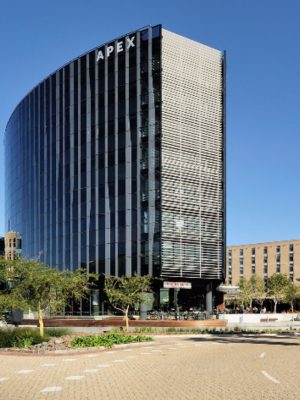
Century City at 25 — Has It Delivered on Its Original Promise?
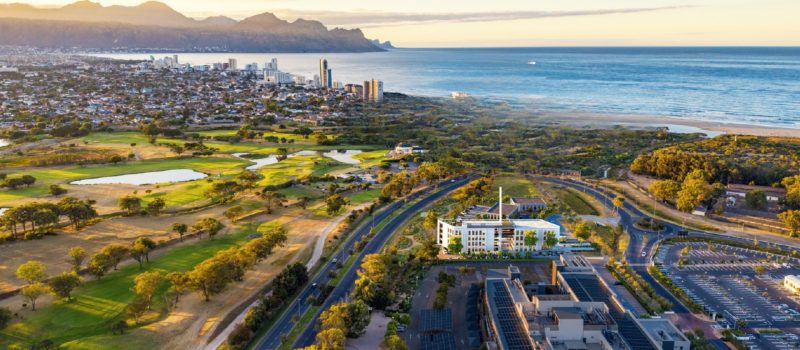
When Rabie Property Group broke ground on Century City in the late 1990s, the ambition was extraordinary by any measure. Not simply another office park on the urban fringe, but a fully integrated precinct, offices, retail, residential, hotels, canals, and public open space all woven into a single walkable environment. A city within a city, designed to function independently of Cape Town’s CBD and transform the commercial geography of the northern suburbs permanently. Twenty-five years on, Century City is unquestionably one of the most recognisable commercial addresses in the Western Cape. But recognisable and successful are not always the same thing. With the benefit of hindsight, it is worth asking honestly: Has the precinct delivered on what it originally promised?
What the Original Vision Actually Was
The masterplan Rabie presented to early investors and anchor tenants was genuinely ambitious for its era. The Canal District was the centrepiece, a network of landscaped waterways designed to give the precinct a sense of place that conventional office parks simply could not replicate. Surrounding it would be A-grade commercial space, a major retail destination, hotels, a conference centre, and a residential component that would allow people to live within walking distance of where they worked. The implicit promise was density and integration. Not a business park you drove to, worked in, and drove home from, but a genuine urban precinct where different uses reinforced each other. The kind of environment that had worked in places like Canary Wharf in London or La Défense in Paris, adapted for the South African context. It was, by the standards of Cape Town commercial property development at the time, a vision of considerable ambition.
The Commercial Property Case
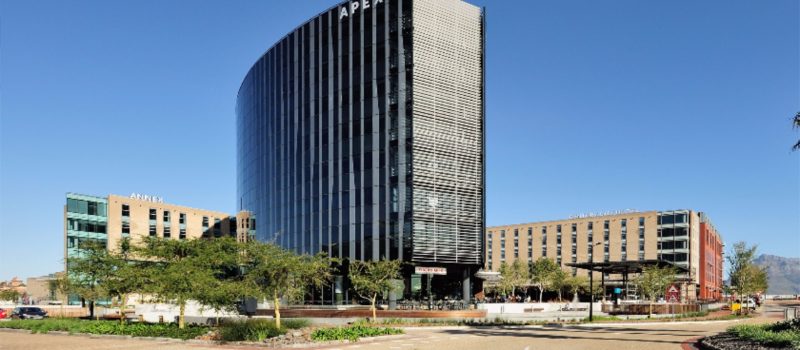
On the metrics that matter most to commercial property, occupancy, rental rates, tenant calibre, and demand consistency, Century City has performed strongly. The precinct has consistently attracted financial services firms, technology companies, media businesses, and corporate regional offices that require an address capable of impressing clients without the operational friction of the CBD. Parking availability, highway access, and modern building stock have made it a credible alternative to the city centre for businesses that need scale and professionalism but cannot justify the premium of a Foreshore address.
Rental rates for A-grade office space in Century City have held up well relative to other northern suburbs nodes, reflecting genuine occupier demand rather than speculative pricing. Vacancy, while not immune to the market cycles that affected all Cape Town office nodes post-pandemic, has recovered to levels that indicate the precinct’s underlying appeal remains intact. What Century City has achieved commercially is a stable, credible office node with consistent demand from quality tenants. That is not a small achievement in a market as cyclical as commercial property.
The Mixed-Use Experiment
The more complicated question is whether the integration of uses that defined the original vision has actually worked in practice. Canal Walk became one of the largest and most successful regional shopping centres in the Western Cape, that part of the vision delivered clearly. The hotel and conference offer, anchored by The Westin and the Century City Conference Centre, has established the precinct as a legitimate destination for corporate events and international visitors.
But the harder test of a mixed-use precinct is whether it sustains life outside of office hours. Does the person who works in Century City also choose to live, eat, and spend leisure time there? The honest answer is — partially. The Canal District canal-side restaurants and the Ratanga Junction site redevelopment have added some vitality. The residential component, particularly Century City Square and the apartment developments along the canal, has brought permanent residents into the precinct. Yet Century City still empties after 5pm in ways that a genuinely integrated urban precinct should not. The energy that defines places like the V&A Waterfront after dark has not fully materialised here. It remains, for most of its occupiers, a destination you commute to rather than a neighborhood you inhabit.
What It Got Wrong
Honest assessment requires acknowledging the gaps. Traffic remains the precinct’s most persistent and most visible failure. Century City Boulevard and the N1 interchange at peak hours are a daily reminder that the precinct’s success has outpaced its transport infrastructure. A development premised partly on reducing car dependency has, in practice, generated significant traffic volumes that the surrounding road network was not designed to absorb. Public transport access has lagged behind the vision considerably. The MyCiTi bus service provides a connection, but the frequency and coverage do not yet match the precinct’s scale. For a development that positioned itself around walkability and integration, the dependence on private vehicles remains disproportionate.
There is also a question of character. Century City is clean, safe, and well-managed, and those qualities are genuinely valuable in a South African commercial context. But the precinct has developed a certain homogeneity that works against the kind of spontaneous urban vitality the original masterplan envisaged. It is corporate and controlled in ways that attract certain businesses and repels others. The creative and technology tenants that have driven commercial property premiums in nodes like Woodstock and the Salt River corridor have largely not chosen Century City, preferring rawer environments with more cultural texture.
The Next 25 Years
The questions facing Century City over the next quarter century are different from those it faced at its founding, and in some ways more challenging. Hybrid work has fundamentally altered the assumptions on which large-scale office precincts are built. The model of thousands of people commuting to the same address five days a week, which Century City’s infrastructure was designed around — is under sustained pressure. How the precinct adapts its commercial offer to accommodate smaller, more flexible floor plates and the changing expectations of occupiers will determine whether it maintains its position or gradually cedes ground to more adaptable nodes.
There is also undeveloped and underdeveloped land within the precinct that represents both opportunity and risk. How Rabie and other developers choose to programme that space, whether doubling down on commercial density or introducing more residential and lifestyle uses, will shape whether Century City moves closer to its original mixed-use vision or consolidates as a primarily commercial node that happens to have retail and hotels nearby.
The precinct’s management structure, which allows for a level of curation and maintenance that unmanaged nodes cannot achieve, remains a genuine competitive advantage. That discipline has protected asset values through multiple market cycles and will likely continue to do so.
Verdict
Century City has delivered on the commercial property components of its original promise clearly and consistently. As an office address it has earned its place among Cape Town’s premier nodes, and the sustained demand from quality tenants over twenty-five years is the most honest measure of that success. Where it has fallen short is on the deeper ambition, the integrated urban environment where work, life, and leisure genuinely coexist. The canal is beautiful. The buildings are well-maintained. But the precinct has not yet become the place its founders imagined, where the boundaries between working and living dissolve into something resembling a real neighborhood.
That is not a verdict of failure. Building a genuinely integrated mixed-use urban precinct from scratch in a South African context, with its particular infrastructure constraints and development economics, is extraordinarily difficult. What Rabie has achieved over twenty-five years is substantial. But the original promise was larger than what has been delivered, and acknowledging that gap honestly is more useful than pretending it does not exist. The next twenty-five years will determine whether Century City closes that gap or accepts what it has become, which, even at its current level of ambition, is considerably more than most commercial property developments ever achieve.
Searching for office space to rent in Century City? Browse available listings across the precinct and speak to a Cape Space advisor about your requirements.
Kevin is a Senior Commercial Real Estate Broker at Rennie Knight Frank. He advises landlords, tenants, and investors across the Western Cape industrial and commercial property market