Why Demand for Small Box Industrial Units Is Outpacing Supply in Cape Town
The Western Cape industrial property market has spent the better part of two decades chasing large-format logistics facilities. Giant distribution centres, big-box warehouses, and purpose-built cold storage complexes dominated the conversation, and developers followed the money. That focus made sense at the time. But while the market concentrated on scale, a quieter and more persistent demand was building from the bottom up. Small box industrial units, typically ranging from 150m² to 600m², are among the most sought-after and least available product types in the Western Cape and across South Africa’s major metros. The gap between what occupiers need and what the market offers has widened steadily, and it is creating real opportunity for landlords, developers, and investors who understand what is driving it.
What We Mean by Small Box Industrial
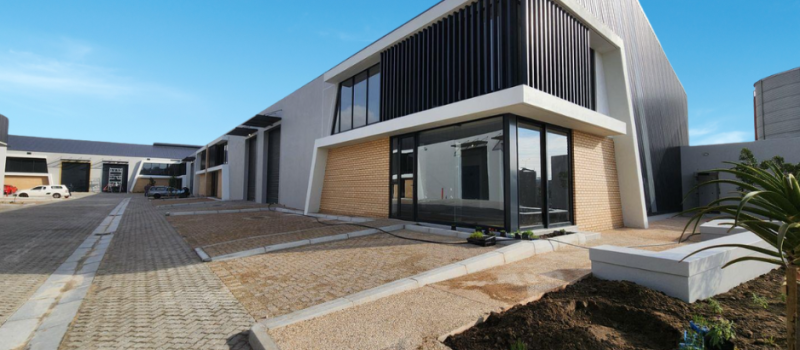
The term “small box industrial” covers a broad range of unit types, but the common thread is functional floor area under 600m² combined with practical yard access, roller shutter doors, three-phase power, and ablutions. These units serve a diverse tenant base: light manufacturers, e-commerce fulfilment operators, automotive repair and parts suppliers, food production businesses, contractors and trades, artisans, and an expanding cohort of owner-managed logistics operations. They are not glamorous. They do not attract the same trophy valuations as premium logistics parks anchored by national retailers. But they are essential infrastructure for the small and medium enterprise sector, which accounts for a significant proportion of employment and economic output in South Africa. When small box supply tightens, it creates a cascading effect on the businesses that depend on this space to operate.
The Supply Problem Is Structural, Not Cyclical
The economics of developing small box industrial product are structurally challenging. Construction costs per square meter are higher relative to income when you factor in the proportionally larger site coverage, the additional partitioning, separate utility connections, and the management overhead of running multi-tenanted light industrial estates. Developers working with the same land cost and build cost as a large single-tenanted warehouse face a more complex project for a lower per-unit return. The risk profile is different, and institutional capital has historically been reluctant to fund it at scale.
The result is that new small box industrial stock has been built primarily by smaller private developers and owner-occupiers, often on an ad hoc basis and in nodes that are already established. There is no pipeline of planned small box industrial parks in most Western Cape nodes that comes close to matching the documented demand. What gets built tends to get absorbed quickly, and older stock, much of it in secondary nodes with dated services, remains stubbornly occupied because tenants have nowhere better to go.
What Is Driving Demand
Several structural shifts are running simultaneously, and they all point in the same direction.
The e-commerce effect on last-mile logistics. South Africa’s e-commerce market has grown materially over the past five years, accelerated first by the pandemic and sustained by shifting consumer behaviour. Last-mile delivery requires proximity to end consumers, which means fulfilment space in or near residential areas, exactly the profile that small box industrial in suburban nodes provides. Couriers, third-party logistics operators, and direct-to-consumer brands are all competing for space in the same nodes, and their requirements typically sit in the 200m² to 500m² range.
The growth of owner-managed SMEs. South Africa’s formal employment market has contracted. That contraction has pushed skilled and semi-skilled workers into self-employment, with many establishing micro-manufacturing, repair, and service businesses that need physical space to operate. These businesses graduate from residential garages and informal arrangements into proper industrial units as soon as their turnover justifies the rental commitment. The pipeline of demand from this segment is continuous, and it tracks closely with broader SME growth in the Western Cape.
The rise of hybrid use. The boundary between light industrial, trade showroom, and office space has blurred. Businesses in sectors like cabinetry, upholstery, signage, audio-visual installation, and IT hardware want a unit that combines a workshop floor with a small client-facing front section. Small box industrial units in accessible nodes deliver exactly that combination, at a fraction of the cost of pure commercial space. Demand from this segment is growing, and it is often willing to pay a premium for units in well-located, well-managed estates.
Construction cost inflation and the shift away from ownership. Rising construction costs have made owner-occupier development less viable for small businesses that previously would have built their own facilities. These businesses are now in the rental market instead, adding to demand without any compensating increase in supply.
Urban densification and industrial displacement. Across Cape Town, industrial land in well-located nodes is being rezoned and redeveloped for residential and mixed-use purposes. Areas like Woodstock, Observatory, and parts of Maitland have lost industrial floor area over the past decade. Businesses displaced from these locations need to find alternative accommodation, typically in secondary nodes further from the city, and they are competing with existing demand for the limited stock available.
The Western Cape Picture
The Western Cape industrial market has specific dynamics that make the small box shortage more pronounced here than in Gauteng or KwaZulu-Natal. Cape Town has a dense concentration of small and medium enterprises relative to its population size. The Western Cape government has consistently promoted the province as a business-friendly environment, which has attracted entrepreneurs and small business owners from other provinces and internationally. The city’s growing technology, agri-processing, food and beverage, and craft manufacturing sectors are all significant consumers of small box industrial space.
At the same time, Cape Town’s industrial land supply is constrained by geography. The mountain, the sea, and protected agricultural land limit the directions in which industrial nodes can expand. Prime nodes like Montague Gardens, Airport Industria, Brackengate, and the Northern Suburbs corridor are well-established but have limited room to grow. Emerging nodes like Atlantis, Lansdowne Road, and parts of the South Peninsula offer alternatives, but they come with trade-offs in terms of labour access, logistics costs, and tenant preference. Vacancy rates for well-maintained small box industrial units in Cape Town’s primary nodes have remained tight. When a well-priced, well-located small unit becomes available, it typically attracts multiple enquiries within days. Landlords who own small box industrial in good condition in the right nodes have enjoyed strong rental growth and minimal vacancy periods over the past three years.
What This Means for Landlords
If you own small box industrial units in the Western Cape, you are in a strong negotiating position. The mistake some landlords make is treating tight market conditions as a reason to reduce management effort. The opposite is true. Tenants who cannot find alternatives are more likely to stay, but they are also more likely to extract informal concessions, delayed rental escalations, deferred maintenance obligations, lease extensions on below-market terms, if the landlord is not paying attention. Active asset management means reviewing market rentals regularly, enforcing lease terms, maintaining the physical condition of the property, and timing renewals and re-lettings to reflect current market conditions.
There is also a meaningful opportunity in repositioning older, tired small box industrial stock. Many of the units built in the 1980s and 1990s remain occupied simply because tenants have no better option, but they are not generating the rental returns the underlying land value warrants. A targeted upgrade, new roller shutters, upgraded three-phase power, improved yard surfacing, basic landscaping, and security improvements can justify a material increase in passing rental and attract a better quality tenant. The capital required is modest relative to the income improvement, and the yield uplift can be significant.
What This Means for Tenants
If you are looking for small box industrial space in Cape Town right now, you face a competitive market and you need to move with more conviction than the market has required in recent years. Waiting for the perfect unit at the perfect price is a losing strategy when vacancy rates are low and demand is active. The priority should be securing a unit that meets your operational minimum requirements and negotiating the best terms available, rather than holding out for a unit that checks every box. In a tight market, the tenant who moves decisively secures the space; the tenant who over-negotiates or delays a decision loses it.
Work with a broker who has genuine knowledge of the relevant nodes and active relationships with landlords in those nodes. Off-market opportunities, units coming available before they are formally listed are common in the small box industrial segment, and access to them depends on having the right representation in place.
Lease terms also deserve careful attention. In a rising rental environment, locking in a longer lease with fixed annual escalations can work in your favour. A five-year lease signed at today’s rental, with an 8% annual escalation, may look very different from what the market offers in three years if supply remains constrained and demand continues to grow.
What This Means for Developers and Investors
The small box industrial segment has historically been under-served by institutional capital, and that remains true. But the risk-adjusted returns available in this segment are now attracting more serious attention from private developers and smaller funds who recognise that the demand fundamentals are durable. The key to viable development economics in this segment is land cost. Small box industrial development in primary Cape Town nodes is difficult to make work at current land prices unless the developer is building for their own portfolio and taking a long view on yield compression. The more viable opportunity is in secondary and emerging nodes where land is cheaper, infrastructure is adequate, and demand from cost-sensitive SMEs is real and growing.
Nodes worth watching in the Western Cape include areas along the N7 corridor north of Montague Gardens, the Brackenfell and Kraaifontein industrial areas, and select locations in the South Peninsula with good road access. Atlantis remains a longer-term play but deserves attention as infrastructure investment in the area grows. The product itself does not need to be complex. Simple, functional, well-maintained units with reliable power, good yard access, and modern security infrastructure will let. Tenants in this segment are not looking for premium finishes, they are looking for space that works, in a location that makes sense for their business, managed by a landlord who is responsive and professional.
Supply is unlikely to catch up with demand in the short to medium term. The structural barriers to small box industrial development are not going away, construction costs are not falling, and industrial land in Cape Town’s established nodes is not getting cheaper. Demand, meanwhile, is supported by multiple converging trends, e-commerce growth, SME formation, urban densification, and the continued shift toward rental rather than ownership for small businesses. The landlords, developers, and investors who understand this dynamic and act on it now are well-positioned. The window is not permanently open. As returns in this segment become more widely recognised, more capital will chase the opportunity and yields will compress. The advantage belongs to those who move while others are still watching.
Kevin is a Senior Commercial Real Estate Broker at Rennie Knight Frank. He advises landlords, tenants, and investors across the Western Cape industrial and commercial property market