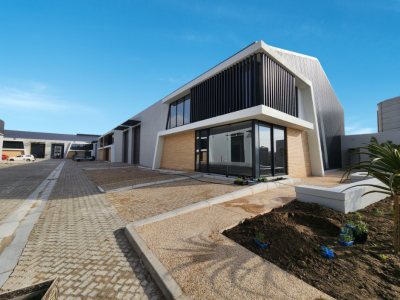
If you are searching for office space, you will see buildings described as Grade A, B, or C. These grades set expectations around quality, pricing, tenant profile, and long-term positioning. They are not formal legal categories in South Africa, but the market applies them consistently enough to guide decisions.
Why grading matters
Grade affects three things that drive outcomes:
- Total occupancy cost (rent, operating costs, parking, utilities)
- Talent and client perception (location, look and feel, amenities)
- Flexibility over time (lease terms, incentives, ability to scale)
If you choose the wrong grade, you either overpay for features you do not use, or you limit growth and brand positioning.
Grade A Offices
What you get:
- Modern design, strong street presence
- High-quality common areas and reception
- Efficient floor plates with good natural light
- Reliable backup power, fibre, and HVAC systems
- Parking ratios aligned with corporate demand
- On-site or nearby amenities (retail, gyms, food, public transport)
Tenant profile:
- Corporate head offices
- Professional services firms
- Tech and BPO occupiers
- Multinationals entering or expanding in Cape Town
Commercial reality:
- Highest rentals in the node
- Lower vacancy in prime locations
- Landlords are selective on covenant and lease structure
- Incentives exist, but are more controlled in tight markets
When it makes sense:
- You need to attract and retain skilled staff
- Your brand relies on client-facing space
- You want operational reliability with minimal disruption
- You plan to stay medium to long term
Grade B Offices
What you get:
- Solid, usable office space
- Decent locations, sometimes just outside prime streets
- Basic to moderate upgrades in common areas
- Standard services (lifts, HVAC, fibre), though not always at premium spec
Tenant profile:
- Established SMEs
- Back-office operations
- Cost-conscious corporates
- Firms that prioritise function over image
Commercial reality:
- Mid-range rentals
- More negotiable lease terms and incentives
- Greater availability than Grade A
- Fit-out condition varies widely—this needs careful inspection
When it makes sense:
- You want a central location without top-end pricing
- You can invest in your own fit-out to improve the space
- Your business does not rely heavily on premium presentation
- You want flexibility on lease terms
Grade C Offices
What you get:
- Older structures and finishes
- Limited or outdated common areas
- Basic services; backup power and modern HVAC are not guaranteed
- Locations may be fringe or secondary streets
Tenant profile:
- Startups with tight budgets
- NGOs and small service firms
- Storage-heavy or low footfall operations
Commercial reality:
- Lowest rentals
- High availability in most nodes
- Landlords often flexible on terms
- Potential for higher maintenance issues and operational risk
When it makes sense:
- Cost control is your primary driver
- Location prestige is not important
- You need short-term or flexible occupancy
- You can operate with minimal infrastructure
Key differences at a glance
| Factor | Grade A | Grade B | Grade C |
|---|---|---|---|
| Building quality | Modern / recently refurbished | Older, partially upgraded | Older, limited upgrades |
| Location | Prime nodes | Good, slightly secondary | Secondary or fringe |
| Rentals | Highest | Mid-range | Lowest |
| Amenities | Extensive | Moderate | Basic |
| Tenant profile | Corporate / multinational | SMEs / back-office | Budget-focused occupiers |
| Availability | Limited in strong markets | Moderate | High |
How to choose the right grade
Start with your business requirements, not the label.
- Headcount and layout: open plan vs cellular, meeting rooms, collaboration space
- Client interaction: frequency of visits and the impression you need to create
- Operational needs: power redundancy, connectivity, parking
- Budget: total occupancy cost, not just rental per square metre
- Lease strategy: flexibility vs long-term security
Then match those needs to the grade that supports them.
See our Portfolio of Office Building in Cape Town
A common mistake is chasing Grade A without a clear use case, or defaulting to Grade B/C purely on price. Both approaches create friction later—either in cost overruns or operational limitations.
What the Cape Town market is doing right now
In nodes like the Cape Town CBD and Century City:
- Prime (Grade A) space is tight, with limited new supply
- Demand is concentrating in well-located, high-quality buildings
- Older B and C stock is being repositioned or converted
- Rental growth is strongest at the top end of the market
This compresses options in Grade A and creates a wider spread in quality within Grade B.
Grade is a starting point. The real decision sits in how a specific building performs against your operational needs and your growth plan. If you are evaluating options in Cape Town, get a clear view of current availability, realistic rentals, and where negotiation is still possible. That is where you secure an advantage.
Most businesses focus on rental and location first. That approach creates avoidable costs later. Your office needs to work on day one and support growth over the full lease term. That requires a clear plan before you commit to a building. Through Cape Interiors, we handle both space planning and fit-out delivery. We align your layout, workflow, and brand with the building you choose, then execute the build to match.
What this means for you:
- You test layouts before signing a lease
- You avoid taking space that cannot support your operations
- You control fit-out costs from the start
- You reduce delays between lease signature and occupation
- You present a workspace that supports staff performance and client engagement
We work with tenants at the point where decisions carry the most weight—before lease commitment and during negotiation. This allows you to secure the right space and structure the deal with the fit-out in mind.
If you are reviewing office options, get the layout and cost model in place early.
Send me your requirement. I will map the space, test it against available buildings, and give you a clear path forward.